
The UK economy will experience the highest inflation levels of the G7 this year despite the cost of living crisis easing, based on new forecasts.
The Organisation for Economic Co-operation and Development (OECD) has revised its predictions for the headline Consumer Price Index (CPI) rate to average 2.8 per cent in 2024 and 2.4 per cent the following year.
The original forecasts were 2.9 per cent and 2.5 per cent for 2024 and 2025, respectively, in November.
Despite Britain’s cost of living pressures improving, this would still see the country suffer the highest level of inflation of all the G7 countries in both years.
Do you have a money story you’d like to share? Get in touch by emailing money@gbnews.uk.
Inflation will be higher in the UK compared to other G7 countries for the time being
GETTY
This year, inflation in the UK is forecast to be higher than Canada at 2.6 per cent, France at 2.7 per cent, Germany at 2.6 per cent, Italy at 1.8 per cent, Japan at 2.6 per cent and the US at 2.2 per cent.
As well as this forecast, the OECD warned about the risk of inflation rising globally due to ongoing geopolitical tensions and the Red Sea shipping disruption due to Houthi attacks on vessels.
Furthermore, the organisation downgraded Britain’s growth forecast for last year to 0.1 per cent from 0.5 per cent.
However, it stood by its previous prediction that the country’s gross domestic product (GDP) will expand by 0.7 per cent next year and 1.2 per cent in 2025.
According to the OECD, central banks may begin to slash interest rates in 2024 sooner than previously expected.
Despite this, the organisation warned that monetary policy has to be “prudent” going forward and that it is “too soon to be sure than underlying price pressures are fully contained”.
Mathias Cormann, the OECD’s secretary-general, shared: “Monetary policy needs to remain prudent, though central banks could start to lower interest rates this year, provided that inflation continues to ease.”
Last week, the Bank of England cited concerns over the Red Sea conflict and the potential impact it will have on global inflation but said the UK has experienced minimal impact so far.
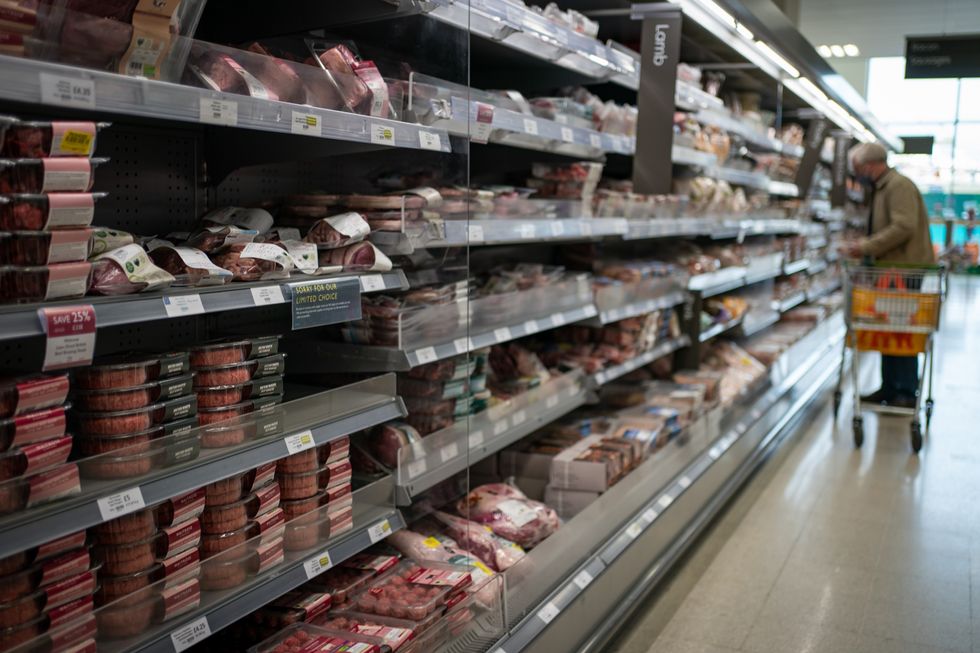 Food and drink inflation has particularly hit Britons over the past year PA
The central bank opted to hold interest rates at 5.25 per cent after inflation jumped slightly to four per cent in December.
Despite this blip, the Bank shared it could begin to cut borrowing costs later in the year if inflation continues to ease.
Included in its latest report, the OECD urged central banks to remain restrictive for some time to come”.
Based on the organisation forecasts, Germany is set for the weakest expansion in the G7 this year, at just 0.3 per cent.
This is followed by France at 0.6 per cent and then both the UK and Italy at 0.7 per cent, according to the OECD.
24World Media does not take any responsibility of the information you see on this page. The content this page contains is from independent third-party content provider. If you have any concerns regarding the content, please free to write us here: contact@24worldmedia.com
Latest Posts
Nigel Farage threatens NatWest with court proceedings to resolve debanking scandal


Amazon delivery driver ‘desperate’ for toilet smashed head on into car

Ricky Norwood set for ITV Dancing on Ice axe as dance expert exposes worrying ‘narrowing down’ trend

HMRC to give hundreds of thousands of households a £300 tax-free payment from today
The culpability for this recession must surely lie with the Bank of England

BBC The Apprentice viewers slam ‘awkward editing’ as contestant cut from spin-off show

BBC to air Steve Wright’s final Top of The Pops appearance amid backlash for treatment of late star
I point the finger of blame far more at the Bank of England than the government on recession