
The police is warning billpayers to watch out for a convincing new TV licence scam.
Criminals are sending emails to innocent victims, pretending to be from TV Licensing, to try to garner personal information.
The UK’s national reporting service for fraud and financially motivated cyber crime Action Fraud has received 6,307 reports within two weeks relating to these fake emails supposedly from TV Licensing.
Some of the emails state a person’s TV licence is about to expire while others claim there was an issue with the recipient’s latest payment.
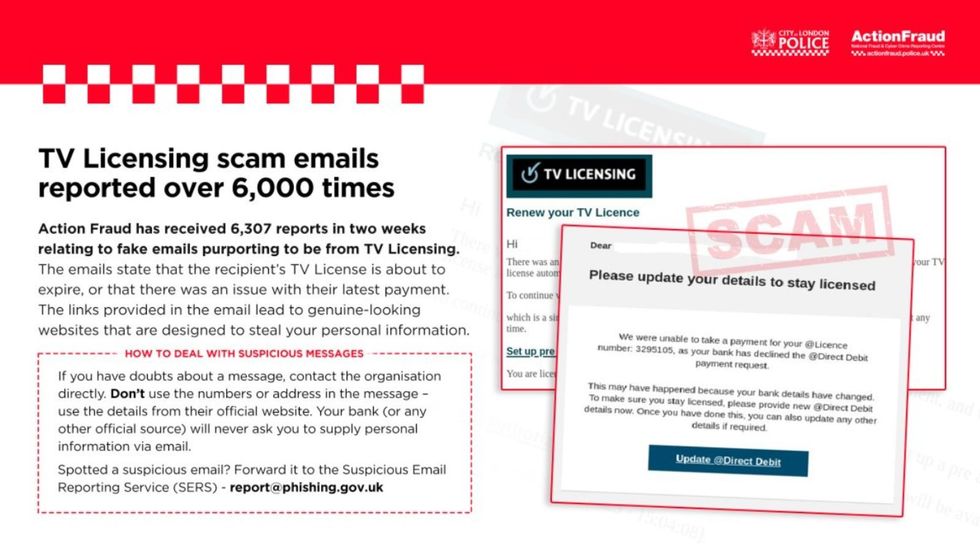
Scammers are purporting to be from TV Licensing to try to steal details
ACTION FRAUD | X | TV LICENSING
Scammers include links within the email which lead to genuine-looking websites that are designed to steal personal information.
In an example shared by Action Fraud, a scam email claims the person needs to update their details to stay licensed.
The fraudsters proceed to claim: “We were unable to take a payment for your @Licence number: 3295105, as your bank has declined the @Direct Debit payment request.
“This may have happened because your bank details have changed.
“To make sure you stay licensed, please provide new @Direct Debit details now.
“Once you have done this, you can also update any other details if required.”
Action Fraud said people should contact the organisation directly if they have doubts about a message.
The alert read: “Don’t use the numbers or address in the message – use the details from their official website.
“Your bank (or any other official source) will never ask you to supply personal information via email.”
People who have spotted a suspicious email are directed to forward it to the Suspicious Email Reporting Service (SERS) – report@phishing.gov.uk.
TV Licensing urges people to “stop” before they enter personal or financial details.
Genuine TV Licensing emails and letters are personalised to licence holders to include details such as name, partial postcode or licence number.
It’s important to check emails carefully, as many scams simply say “dear customer” or use the recipient’s email address, and they may have a made-up postcode or licence number.
They said: “Remember, we will never call to ask for:
A TV Licensing spokesperson said: “We take the protection of our customers extremely seriously and work with groups across the UK to raise awareness of how people can avoid scams.
“We’d encourage anyone who is suspicious or doubtful about whether correspondence is genuine to call us or check our website where there is guidance on how to spot scams.”
24World Media does not take any responsibility of the information you see on this page. The content this page contains is from independent third-party content provider. If you have any concerns regarding the content, please free to write us here: contact@24worldmedia.com
Latest Posts
Nigel Farage threatens NatWest with court proceedings to resolve debanking scandal


Amazon delivery driver ‘desperate’ for toilet smashed head on into car
Ricky Norwood set for ITV Dancing on Ice axe as dance expert exposes worrying ‘narrowing down’ trend

HMRC to give hundreds of thousands of households a £300 tax-free payment from today
The culpability for this recession must surely lie with the Bank of England
BBC The Apprentice viewers slam ‘awkward editing’ as contestant cut from spin-off show
BBC to air Steve Wright’s final Top of The Pops appearance amid backlash for treatment of late star
I point the finger of blame far more at the Bank of England than the government on recession