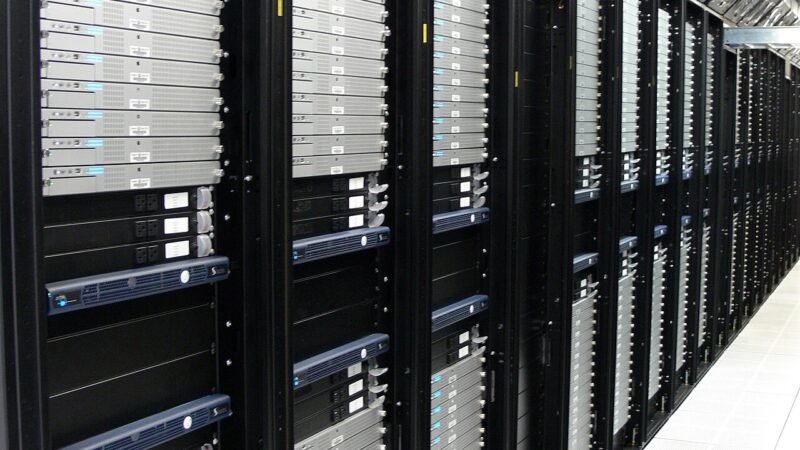


Nvidia has pledged 250 million dollars in computing resources over five years to accelerate agentic AI safety and security research in the United Kingdom, the company announced on October 14.
Reuters reported the pledge would deliver about 50 million dollars a year in compute access through UK-based Nvidia Cloud Partners, dedicated to agentic safety testing. Dedicated support will go to three initiatives: the British Open-Ended Learning and Discovery Lab (BOLD), the Science of Fundamental AI Research Lab (SOFAIR), and Imperial College London. “AI capability and safety must advance together,” said Jensen Huang, Nvidia’s founder and chief executive. British AI minister Kanishka Narayan welcomed the donation, saying it would help ensure future AI is safe and serves people’s best interests.
Why agentic AI is a safety priority
Agentic AI systems can plan, use tools and operate in physical settings rather than simply answering questions — which makes their failure modes harder to predict and test. BOLD, led by the University of Oxford, is developing AI that learns, adapts and works alongside people; SOFAIR, led by University College London, focuses on open-source AI architectures; Imperial College London will concentrate on safety engineering and robotics.
Scrutiny of AI safety has intensified after developers including Anthropic and OpenAI disclosed instances of rogue behaviour by AI agents, Reuters noted. The pledge is compute access rather than a cash grant, and provider selection, technical architecture and commercial terms remain to be agreed — so researchers do not yet know exactly what capacity they will receive.
What the pledge signals for the industry
For the world’s most valuable chipmaker, funding safety research abroad buys credibility in the governance debate — a point critics will not miss, given IMF warnings that AI-financing risk could jolt markets if expectations disappoint. Britain’s strategy is also clear: while it is home to no major AI developers, it wants a leading role in evaluating and managing the technology’s risks, partly through its AI Security Institute. Microsoft president Brad Smith said Monday the UK was well placed to help lead work on AI safety guidelines.
Large technology bets are stacking up across the sector, from SpaceX’s reported 8 billion dollar spectrum purchase to NASA’s plan to replace the ISS with private stations. Nvidia’s commitment buys neither customers nor capacity for itself. Whether compute philanthropy becomes a pattern among AI’s winners will depend on what UK researchers actually produce with the hours.