


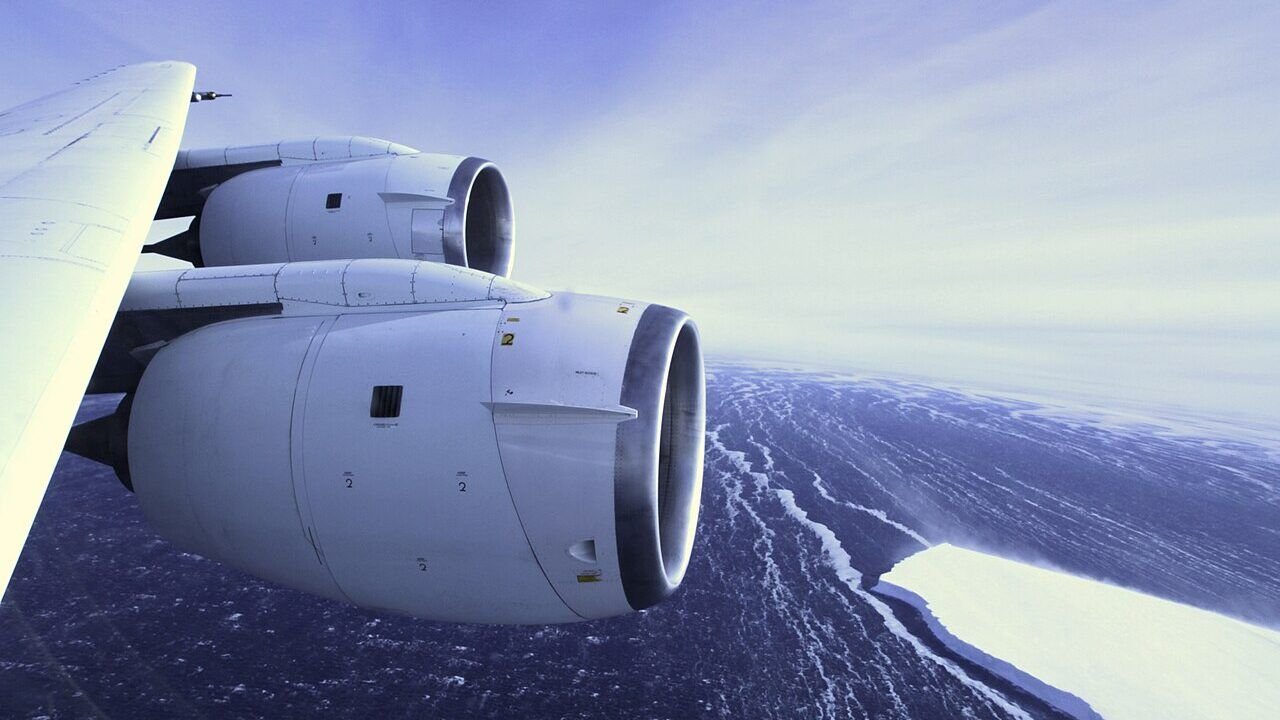
Antarctica will very likely lose more ice than it gains this century even if the world cuts emissions sharply, according to a study published in Nature Geoscience that narrows one of the biggest uncertainties in sea-level forecasting. The research, by an international team including Rutgers climate scientist Robert Kopp, combined ice-sheet modelling with machine-learning calibration against satellite gravity data from 2002 onward, and found a probability of at least 0.92 that the continent has net ice loss this century even under deep emission cuts. Under very high emissions, Antarctica’s median contribution to global sea level by 2100 is 15.7 centimetres, with a 95th-percentile estimate of 25.4 centimetres. The team also found at least an 89 percent probability that the most ambitious low-emission pathway consistent with the Paris Agreement would produce less Antarctic ice loss by 2100 than a very-high-emissions scenario, and a probability of at least 0.99 that higher emissions produce higher sea-level rise than the lowest scenario. The study weighs in on a long-running disagreement among ice-sheet models: whether extra snowfall in a warmer climate could offset ice lost to a warming ocean. It finds that it cannot, at least not enough to change the sign of the result. That matters because in the main international comparison of ice-sheet models, projections for 2100 under very high emissions once ranged from Antarctica lowering sea level by more than 7 centimetres to raising it by more than 40, a spread too wide for coastal planners to use. Kopp framed the conclusions as sobering but actionable: coastal communities need to prepare for rising seas, and the amount of rise they will have to manage still depends on choices made today; cutting emissions now can limit the risks facing future generations, and better projections help communities decide how to protect homes, roads and other essential infrastructure. The authors emphasise what their framework does not yet include. Several processes remain largely unexplored in the model comparison they calibrated, including marine ice cliff instability, coupled ice-ocean-atmosphere interactions, higher-resolution surface mass balance, ice damage mechanisms and subglacial hydrology, any of which could accelerate mass loss once incorporated. The honest reading, then, is that 15.7 centimetres is a central estimate inside a system whose known unknowns lean toward faster loss, not slower. For coastal cities, the difference between the median and the 95th percentile is the difference between manageable adaptation and a much harder century: drainage, flood defences, insurance retreat and infrastructure elevation are all priced against exactly these numbers. A study that converts a 47-centimetre spread of disagreement into a calibrated probability distribution is, for the engineers who have to build against the ocean, the difference between a guess and a plan. The decisions the paper says still matter, emissions today, are not Antarctica’s to make. But for the first time in this modelling lineage, the continent’s answer to them comes with odds attached, and the odds say the ice is going either way; only the amount is still negotiable.
Related reading: Two New Observatories, Rubin and Roman, Begin a New Era of Sky Surveys · Webb Telescope Spots Its First Entirely New Exoplanet, a Young Gas Giant Called TWA 7b · Radio Bursts May Reveal an Exoplanet's Magnetic Field for the First Time


1 Comment