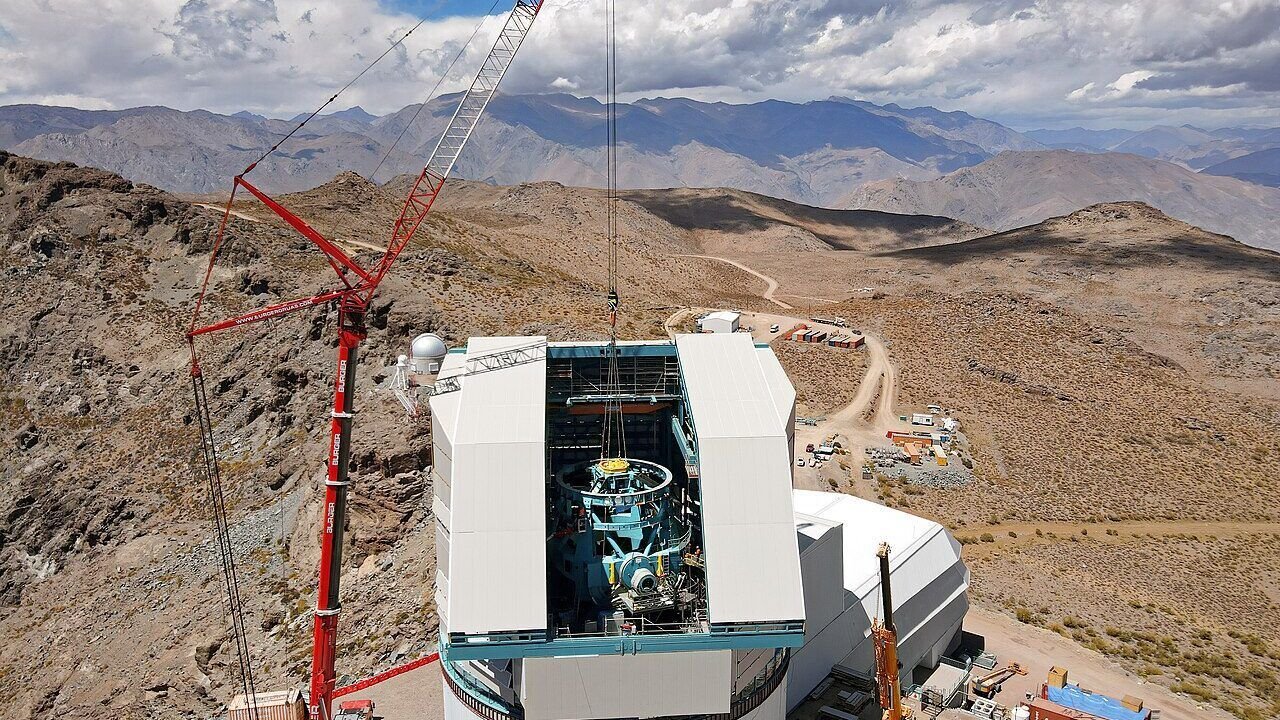
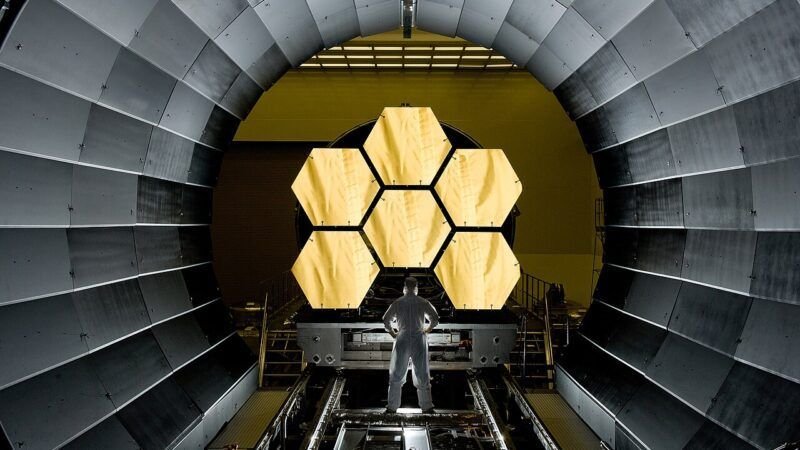
A new era of astronomical surveys has begun with two flagship observatories starting work within weeks of each other, according to astronomers reviewing the facilities’ first months: the ground-based Vera C. Rubin Observatory in Chile, which began observing in June, and the Nancy Grace Roman Space Telescope, launched in August and expected to begin observations in December from the Sun-Earth Lagrange point L2, where it will join the James Webb Space Telescope. The pairing is deliberate in design even if coincidental in timing. Rubin, with its enormous field of view, will photograph the entire visible southern sky every few nights for a decade, producing a time-lapse of the universe that catches supernovae, asteroids, variable stars and anything else that moves or changes. Roman, a space telescope with a wide-field infrared camera and a field of view a hundred times Hubble’s, will conduct deep surveys of billions of galaxies, hunt exoplanets by microlensing, and map the distribution of dark matter through gravitational lensing. Roman is named for Nancy Grace Roman, NASA’s first chief of astronomy, often described as the mother of the Hubble Space Telescope. The relation between the two telescopes is uncanny: Roman’s 2.4-metre mirror is exactly the same size as Hubble’s and was produced in the same facilities, because the mirror was donated by the National Reconnaissance Office, one of a set of spy-satellite mirrors built for looking at Earth, now turned to look away from it. That donation is why a flagship-class space telescope could be built on its budget and schedule at all. The science cases overlap productively. Both observatories are, at their core, dark-energy machines: Rubin’s decade-long movie of the sky and Roman’s deep galaxy maps attack the accelerating expansion of the universe from different angles, and both will produce data volumes that force astronomy further into machine learning, since no human workforce can inspect billions of objects by eye. Rubin alone is expected to issue millions of automated alerts per night for transient events, feeding a global network of follow-up telescopes, many of them robotic. Their exoplanet strategies also complement Webb’s. Where Webb characterises individual worlds in detail, Roman’s microlensing survey will conduct a census, estimating how common planetary systems like ours actually are, including free-floating planets with no star at all, a population about which almost nothing is currently known. It is a useful corrective to think of these not as telescopes but as surveys with mirrors attached. The discoveries most likely to define them are the ones nobody proposed: the object classes, like interstellar visitors and kilonovae before them, that only appear when an instrument watches everything, all the time, and keeps the receipts. Rubin began that watch in June. Roman joins it in December. The sky, from this year onward, is being recorded.
Two New Observatories, Rubin and Roman, Begin a New Era of Sky Surveys
A new era of astronomical surveys has begun with two flagship observatories starting work within weeks of each other, according to astronomers reviewing the facilities' first months: the…