

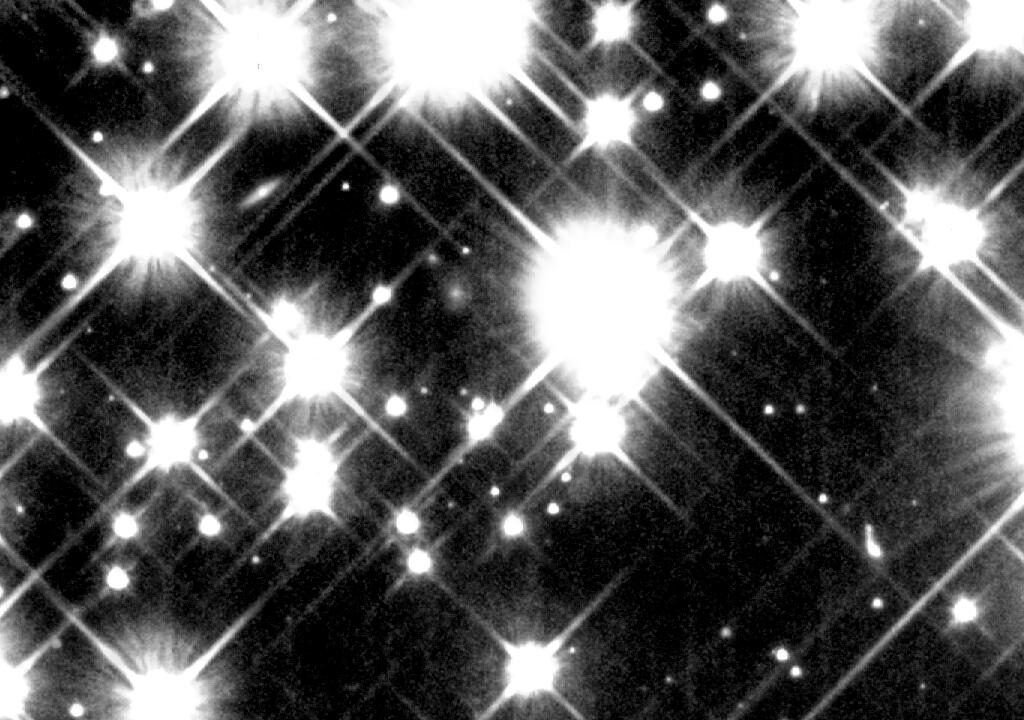
A second-generation planet may orbit the white dwarf HS 0209+0832, built from material its star shed as it died, according to a study published in Nature Astronomy and reported this week, a finding made possible by chemical fingerprints hiding in Hubble Space Telescope data taken in January 1999. The data, from Hubble’s Space Telescope Imaging Spectrograph, recorded the light of the white dwarf, a stellar remnant with a surface temperature of about 35,800 kelvin, a hydrogen atmosphere with roughly 1 percent helium, and an estimated age as a white dwarf of about 5 million years. For more than two decades, about a hundred spectral lines in that data went unidentified. A doctoral researcher at Warwick reviewing the archive realised the unfamiliar signature was niobium, an element he had never seen in a star’s light, and the team now says most of those mystery lines are copper and niobium. White dwarfs are normally chemically pristine on the surface, because gravity pulls heavy elements down out of sight quickly; finding metals like these in the atmosphere means the star is actively accreting them from something nearby. The team’s interpretation is that the white dwarf is consuming gas from a planet that formed after the star died, assembled from the material the star expelled during its red-giant phase, a second generation of planet formation around a stellar corpse. The claim is extraordinary because planet formation is supposed to happen once, around a young star, from its birth disc. A star like the Sun ends by swelling into a red giant, engulfing or scorching its inner planets, then shedding its outer layers and collapsing into a white dwarf. Debris from that shedding could, in principle, gather into new bodies, and astronomers have found debris discs and disintegrating planetesimals around white dwarfs before, but a planet-scale gas reservoir feeding one is a stronger and stranger signal. The chemical evidence is the argument’s core: the specific pattern of copper, niobium and the other elements already known in the spectrum, carbon, aluminium, silicon, calcium, titanium, nickel and zinc, has to match what a second-generation planet’s composition would deliver, against alternatives such as the shredded remains of an original planet that survived the star’s death. Distinguishing those histories is the work the paper makes a case for, and independent analysis will test it. Either answer is interesting. If the object is a survivor, it endured its star’s red-giant phase and is now being consumed. If it is second-generation, then planet formation is not a one-time event in a system’s life, and the census of where planets can exist has to include the graveyards of stars. There is a long-view poignancy in the data source. The decisive observation was taken by Hubble in 1999 and sat in an archive for over twenty years waiting for someone who did not know what niobium looked like to ask what the lines were. Astronomy’s archives are full of such unasked questions, and studies like this one are the argument for keeping them. Our own Sun will become a white dwarf in several billion years. Whether anything will be orbiting it then, original or second-generation, is a question this odd, metal-stained star has made legitimate to ask.
Related reading: Radio Bursts May Reveal an Exoplanet's Magnetic Field for the First Time · NASA Curiosity Image Shows Dawn Light on Wind-Carved Mars Cliffs · Three Scientists Share Nobel Medicine Prize for Optogenetics Discoveries