

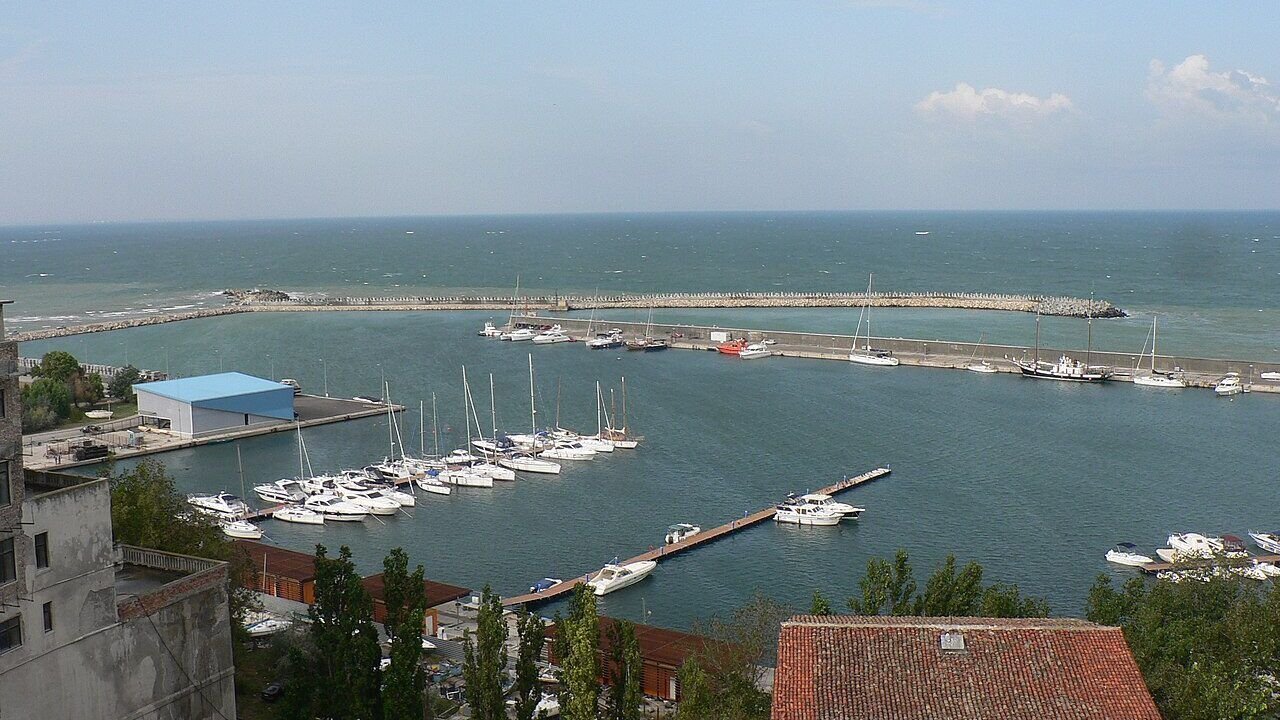
A Turkish-owned cargo ship carrying corn sank in the Black Sea off Romania on 5 October after a fire on board, killing two crew members and prompting a rescue operation inside Romania’s exclusive economic zone, according to Romanian authorities. Eleven crew members were rescued, three of them injured and airlifted by helicopter to hospital in Constanta, where they were reported conscious and stable. Romania’s interior ministry said coast guard border police were informed at around 11 a.m. that a fire had broken out aboard a commercial vessel about 30 nautical miles south of Sfantu Gheorghe, outside Romanian territorial waters. Rescue ships and a helicopter were dispatched after the crew reported the emergency, and two bodies were recovered from the vessel, the 139-metre Royad Mammadov, which had been sailing from Ukraine’s Izmail port to Ravenna in Italy with a crew of Azerbaijani and Indian nationals. Ukraine’s president said the ship was hit by two Russian drones in neutral waters, describing the strike as horrific and saying the captain had been killed, although the captain’s status was not independently confirmed in Romanian statements, and Romanian officials said they had not issued a final finding on the cause of the fire. Russia did not comment on the vessel, although its defence ministry had said earlier that it struck two cargo vessels, and announced it would step up strikes across Ukraine. A Romanian naval authority spokesperson said the fire started after a suspected drone strike. The sinking came a day before two more commercial vessels were attacked in Bulgaria’s exclusive economic zone, one of which also sank, and together the incidents mark a westward spread of the danger facing civilian shipping in the Black Sea, into the waters of two NATO and European Union member states. Romania’s ports, Constanta above all, have become critical alternative export routes for Ukrainian grain since the war disrupted traditional channels, and ships sailing them have generally considered the western Black Sea safer than the waters nearer the fighting. That assumption is now being revised in real time. For shipping companies, the consequences are commercial as well as humanitarian: war-risk insurance premiums, crew bonuses and routing decisions all respond to exactly this kind of incident clustering. For the families of the two men who died, and for the crews still crossing these waters, the abstraction of maritime security has a human price. Romania said its structures were carrying out a complex rescue mission; by the time it ended, the ship was on the seabed and the questions, about who fired, why, and what would deter a repetition, were left to investigators and diplomats. The incident also underlines the exposure of the world’s food system to a single contested sea. A cargo of corn bound from a Ukrainian river port to Italy is the kind of shipment that normally attracts no attention at all. In the Black Sea in October 2026, it attracted drones, according to Kyiv’s account, and ended with a ship sunk, two sailors dead and another NATO coastline conducting a rescue inside its own economic zone.
Related reading: UK Ends France Returns Pilot and Reopens Resettlement Routes With Annual Caps · Britain's Earned Settlement Plan Would Lengthen the Road to Staying Permanently · South Korea Denies Report That Its Ports Eased Russia's Fuel Shortage