

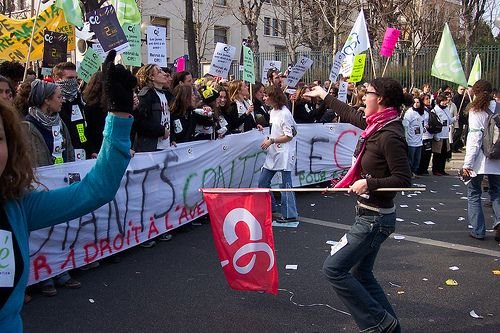
Student protests have swept across France, with high-school pupils joined by teachers and parents in demonstrations that have challenged the government and disrupted schools.
Reuters and New York Times coverage described major demonstrations and a government searching for a way out of the confrontation. The scale of the mobilisation, drawing in families as well as students, has made the unrest harder to dismiss as a routine campus dispute.
According to BBC reporting, France halted the use of stun grenades after a boy’s hand was blown off. That decision, reported in connection with the handling of protests, has intensified debate about crowd-control weapons and the policing of demonstrations involving minors.
Stun grenades, designed to disorient with a loud blast and flash, have long been controversial in France. Critics argue they can cause severe injuries when used in dense crowds; officials have historically defended them as an alternative to more direct force. A suspension, if maintained, would mark a significant shift in practice.
The presence of teachers and parents alongside pupils changes the politics. It suggests the grievances, whatever their specific trigger, resonate beyond school gates, and that the government faces not a single constituency but a coalition of students, educators and families who do not normally march together.
For the authorities, the immediate task is de-escalation: keeping schools open, keeping protests peaceful, and finding a channel for negotiation before positions harden. French governments have, in past education disputes, discovered that measures announced without consultation can unite otherwise divided opponents.
Opposition parties are likely to press the government in parliament, while unions weigh whether to widen industrial action. Each new demonstration will test both the protesters’ stamina and the state’s restraint.
What remains unclear is the exit. Concessions on policy, changes to protest policing, and a timetable for talks are all tools governments use in such moments. Until one is chosen, France’s schools and streets are set to remain the place where this dispute is settled.