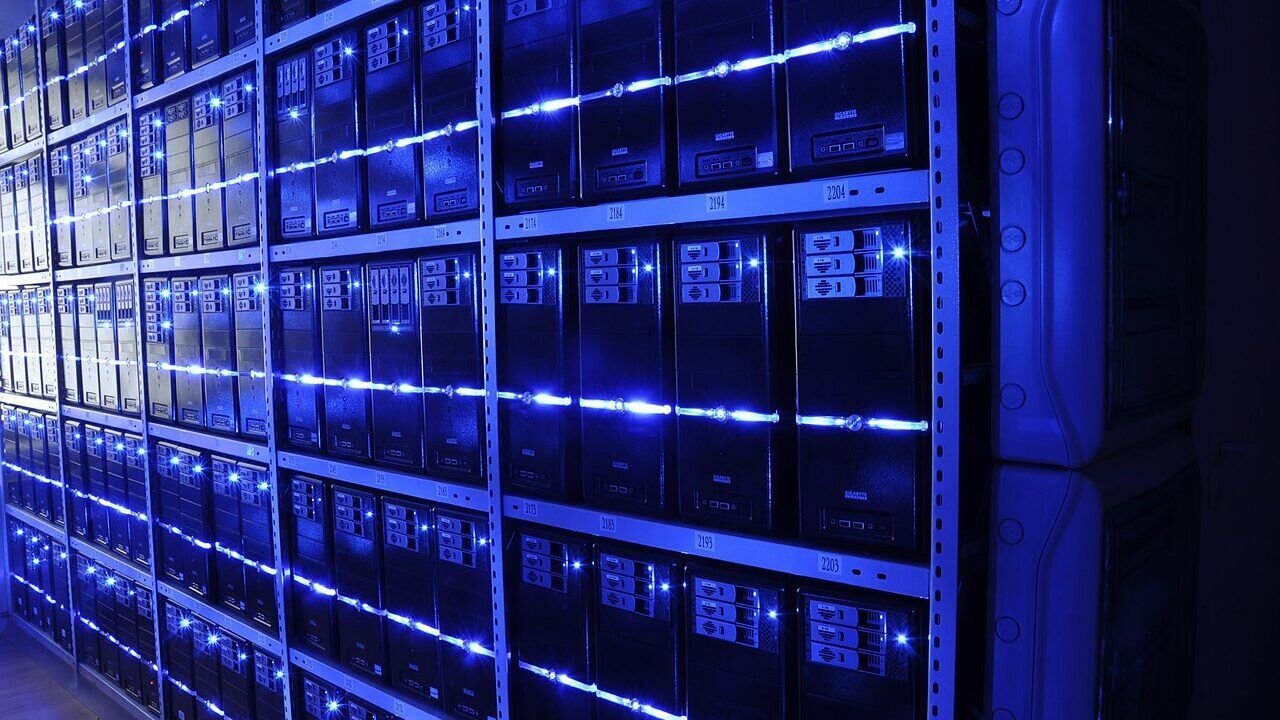
An Italian partnership plans to invest more than €1 billion over four years to build a network of 13 medium-sized data centres across Italy, the companies involved have announced, in a project that ties new computing capacity to renewable electricity generated on site and the reuse of former industrial land.
Core Stack, the digital infrastructure business of Lazzari Group, and Green Arrow Capital, an independent asset manager active in private markets, said the first two facilities are planned near Cremona and Verona, where permit applications are at an advanced stage. The companies expect construction permits by the end of 2027 and operations to begin in the first quarter of 2028. After the initial developments in Italy’s north and northeast, the programme will give particular attention to central and southern regions.
The strategy differs deliberately from the giant hyperscale campuses being built for global cloud and artificial intelligence companies. Instead of concentrating capacity in a few very large sites, the partnership intends to operate thirteen mid-sized facilities as a single national network, placing computing infrastructure closer to businesses and users in different regions. A distributed model can offer redundancy and operational continuity, reduce latency for some applications, and avoid concentrating all new capacity in one metropolitan hub. The companies said development will rely on an entirely Italian supply chain.
Energy is the project’s defining feature. Each facility is intended to use renewable electricity generated on site, and battery storage is being considered in collaboration with the Polytechnic University of Milan to improve energy performance. That design responds to the central constraint now facing data-centre development across Europe: grid capacity. Industry figures presented this week in Rome estimated that grid-connection requests in Italy run to between 60 and more than 100 gigawatts, far above the roughly 1.9 gigawatts of projects at advanced development stages, although connection requests are not equivalent to active projects and the figures are not fully reconciled.
The wider Italian market is expanding quickly on the same forecasts. A study commissioned by the Italian Datacenter Association, presented at its symposium in Rome on 8 October, projected that the commercial data-centre sector could attract about €36.9 billion, roughly $41.5 billion, of investment through 2036, with commercial IT capacity rising from 460 megawatts in 2025 to about 2.3 gigawatts by 2031. Milan and Lombardy remain the country’s main hub, with projects also emerging in Piedmont, Puglia and Sardinia. In August, the government designated data-centre programmes in Lombardy and Sardinia as projects of national strategic interest, and Italy has introduced a unified authorisation process intended to speed approvals.
Caution is warranted about timelines. The €1 billion figure is a planned investment pipeline over four years, not capital already spent, and the projects remain dependent on permitting. Italy’s recent history suggests the gap between announced and operating capacity can be wide; the industry study itself noted that from 2023 through 2025 the sector invested about 68 percent of what had been projected for that period.
Even so, the direction of travel is clear. Artificial intelligence and cloud demand are pulling data-centre investment into regions that were previously peripheral to Europe’s digital map, and developers who can solve the power question, ideally with generation they control, are the ones most likely to get built. A network of thirteen renewable-powered, mid-sized Italian sites is a bet that the future of computing infrastructure is distributed, regional and inseparable from energy policy.